
I Will Not Retreat
Dear Elizabeth,
It breaks my heart to write to you today
Knowing how my words may burden you at your time of rest.
Please forgive me. But not to write to you, to not attest,
To not inform you, not to speak…not to make a fuss…
Elizabeth, our museums, our libraries, these sage
And learned institutions, the very testament to us,
Are in grave peril. For there is no money,
We’re told, and it seems there is no will to value, to rescue, to save.
I know that you would lie awake to think of a plan,
A subtle, censoring strategy. Send forth
A crafted note, to every woman, a rousing petition,
Appealing to the heartless, shape-shifting politician.
Make no mistake, as I write, the insistent digital rhythm,
Beats against the breaking day and knows no nightly rest.
The rhetoric that sells to us the notion
That computerisation is our saviour, that it deserves our devotion.
I fear your words will soon be scanned, uploaded, digitised, recoded,
To a series of nought and one. The brush of my hand against parchment,
Where your hand rested also, where you paused to write, to think,
The physical page, the tangible evidence gone.
But know this, Elizabeth, that I will not retreat, but with gentle influence
And steady resolution exert all that I am, for all that you were.
And work within the hallowed museum, to herald the object as King,
Reveal its stories, illuminate for all to see the truth it holds within.
But, at least, for now, fragile, I have your words, the paper, foxed and true,
In every way the material link, to the immortal you.
But here is the problem, the nub of this pain,
This letter, my thoughts, unsent, in vain.
Creative Writing Workshop – University of Leicester
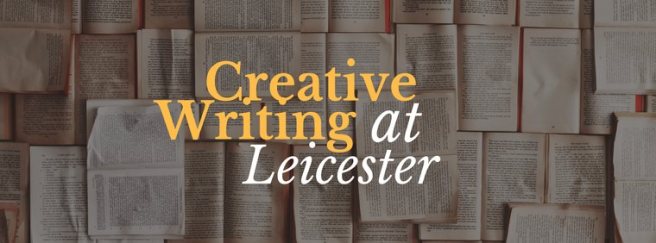
A poem as a letter in the epistolary form. Published by the University of Leicester as part of a creative writing workshop Women’s Writing in the Midlands, 1750-1850 Susanna Watts and Elizabeth Heyrick. A Poetry Collection.

Susanna Watts and Elizabeth Heyrick
Elizabeth Heyrick (1769-1831) and Susanna Watts (1768-1842) were active members of a dissenting network that spread across the midlands during the late 18th and early 19th centuries. Their activism in the abolitionist movement played a crucial role in amplifying the voices of women against slavery. In 1824, although it had been seventeen years since the Abolition of the Slave Trade Act, slavery still continued, and Elizabeth Heyrick, unlike leading male abolitionists, called for its immediate end – ‘it is utterly astonishing,’ she wrote, ‘that our compassion and sympathy should be so timid and calculating—so slow and cautious’.
In the Record Office for Leicestershire, Leicester and Rutland is a large black ledger, heavily worn, of a type which might have been used by some hosiery manufacturer or Leicester shopkeeper. But this ledger is bursting with letters, drawings, poems and ephemera: it is a record not of business transactions but of female connection, creativity and activism in Leicester in the early nineteenth century. Owned by Susanna Watts (c. 1768–1842), it bears witness to her own intellectual interests and to her friendships with other women writers and campaigners.
Felicity James and Rebecca Shuttleworth
Epistolary Poems
Epistolary poems, from the Latin “epistula” for “letter,” are, quite literally, poems that read as letters. As poems of direct address, they can be intimate and colloquial or formal and measured. The subject matter can range from philosophical investigation to a declaration of love to a list of errands, and epistles can take any form, from heroic couplets to free verse.
The appeal of epistolary poems is in their freedom. The audience can be internal or external. The poet may be speaking to an unnamed recipient or to the world at large, to bodiless entities or abstract concepts.
The Academy of American Poets
 anna larner